Casa Azzurrina
Plenty of people know Elba for snorkelling. Scuba diving is another thing: you drop down to where the light thins out, along granite walls that carry on underwater the way they do above it, and you meet life you never see from the surface. The south-west coast, our side, is one of the best places to start from.
If you're certified, or thinking of getting certified on holiday, here is what the sea around Seccheto has to offer.
The Elviscot wreck
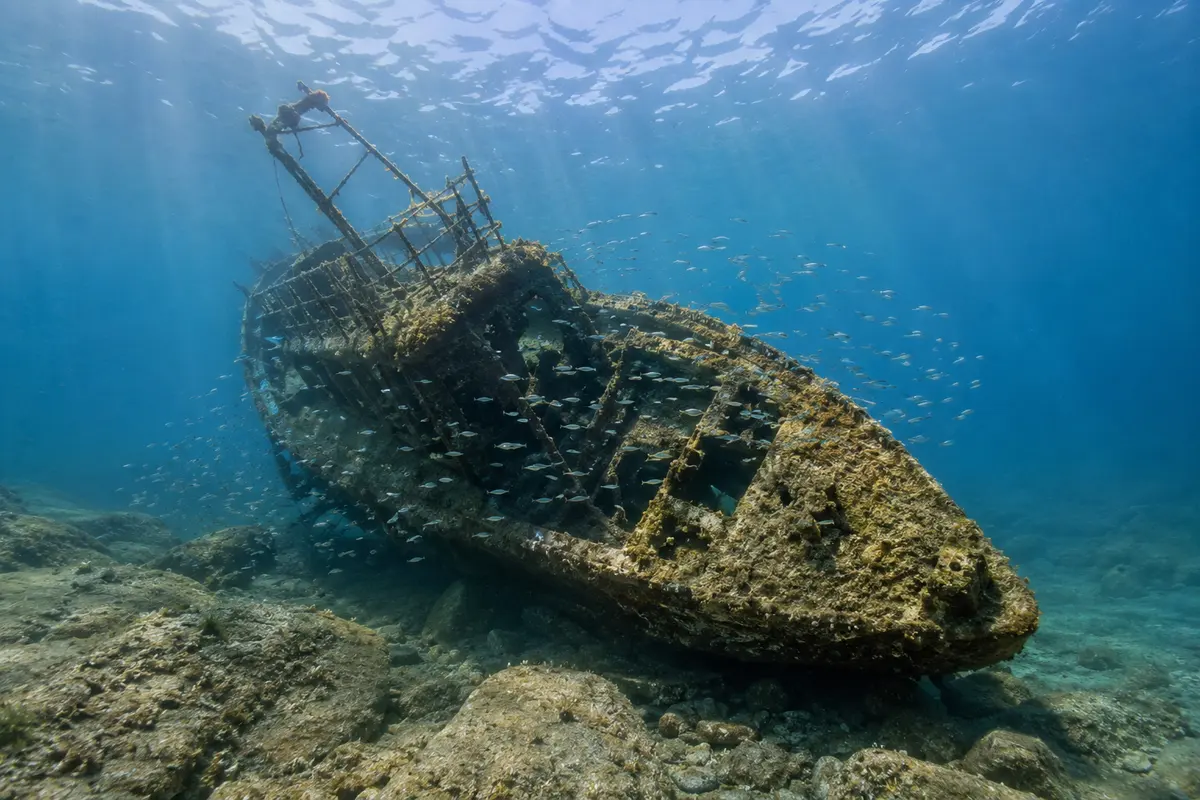
Off Pomonte, the village next to Seccheto, lies Elba's most famous wreck: the Elviscot, a cargo ship that sank in 1972. It rests on its side on a seabed about 12 metres down, close to shore and within reach of beginners. It has become an artificial reef: the hull is covered in life, and bream, corb and the odd large grouper move through the gaps in the steel.
The shallow depth makes the Elviscot perfect for a first wreck dive, but experienced divers like it too, for the sheer amount of fish and the light that filters through on clear days. Local dive centres reach it by boat, and in good conditions you can even swim out from Pomonte beach.
The other sites
Elba isn't only the Elviscot. Scoglietto, off Portoferraio, is a reef full of nooks and crannies. Capo Sant'Andrea, at the north-west tip, has very clear water and walls that drop into the deep. Further out, the Formiche della Zanca and the west-coast pinnacles offer more demanding dives, with sea fans and shoals of barracuda. Most of these are easy to reach if you stay on the west side of the island.
What you see down there
Granite makes dens and crevices, and where there's shelter there's life. Brown groupers, octopus, moray eels tucked into the rock, clouds of damselfish that darken the water, the odd barracuda hunting in open water. Over the sandy bottoms lie the posidonia meadows, the nursery of the Mediterranean. Don't expect tropical colours: Elba is understated, all greens, ochres and blues, and that's exactly why it rewards anyone who looks closely.
Dive centres and the right season
Several dive centres operate on the island, usually from April to October. The water is warmest and clearest between late June and September, but the shoulder months bring fewer boats and often better visibility. If you're coming specifically to dive, it's worth reading how the island changes in the September–October shoulder season.
Diving or snorkelling?
If you're not certified you're not missing out: the south-west coast is wonderful with just a mask and fins. We've written about that separately, with the spots you can reach from shore, in our snorkelling guide near Seccheto. Tanks add depth and wrecks; snorkelling adds freedom and no logistics. On holiday, many people do both.
Staying close to the sites
The best west-coast spots, the Elviscot included, are a few minutes from Seccheto. Our apartments in Seccheto, Appartamento Mare and Appartamento Cielo, make a handy base for divers: the centres at Pomonte and Marina di Campo are close, and after a dive the sea at home is right there for an easy cool-down.