Casa Azzurrina
August on Elba has its logic. Families with school-age children don't have a choice. The Mediterranean light is extraordinary. The sea is warm. But if you do have flexibility in your travel dates, September and October on this island are the months we keep returning to ourselves — and the months we find ourselves recommending most readily to guests.
Here's the honest picture of what shoulder season on Elba actually looks like.
The Sea and the Weather
Water Temperature
The sea around Elba reaches its peak temperature in August, typically around 26–27°C. By September, it has dropped slightly to around 25–26°C — which, to be clear, is excellent swimming water. Most people who visit in September spend just as much time in the sea as they would in August. The difference is barely perceptible in terms of comfort.
By October, water temperature falls to around 22–23°C. This is noticeably cooler — some swimmers will find it perfect, others will find it a little bracin for long sessions. But for snorkelling, diving, or a swim before lunch, it remains entirely pleasant for most people, particularly those used to northern European sea temperatures where 21°C would be considered warm.
Air Temperature
September daytime temperatures on Elba average around 26°C, with evenings cooling pleasantly to around 19–20°C. This is, by most measures, an ideal climate. It's warm enough for beach days and evening meals outside, but it's not the punishing heat that can descend on the island in July and August when 35°C days are not unusual.
October is cooler — typically around 20–22°C during the day — and begins to feel properly autumnal by late in the month. Mornings can be fresh. The light changes: less harsh, more golden, more interesting for those who notice such things. There is a specific quality to October light on a Mediterranean island that is genuinely beautiful.
What Happens to the Crowds
This is the most significant change.
August on Elba is the peak of Italian domestic tourism. Families from Florence, Milan, Rome, and the broader Tuscan coast fill the island. Ferries from Piombino run multiple times a day and book out weeks in advance — sometimes months for car ferries. Beaches in the popular spots (Procchio, Marina di Campo, parts of Portoferraio) reach their capacity. In the narrow streets of Seccheto or Cavoli, parking becomes a real exercise. Restaurants on the southwest coast are full by eight in the evening.
September changes this fast. The first week after Ferragosto (the August 15th Italian summer peak) you can already feel the island begin to exhale. Schools start in mid-September in Italy, which accelerates the exodus. By late September, we estimate the island sees somewhere around 50–60% fewer tourists than the August peak. By October, the remaining visitors are almost exclusively adult couples, retirees, serious outdoor enthusiasts, and a growing number of remote workers who have discovered that an island with reliable wifi, good food, and an empty beach is a productive environment.
The practical consequences of this shift are real:
You can book a ferry one or two days in advance instead of weeks out. You will not sit in a ninety-minute queue at the Piombino pier. You can walk into most restaurants without a reservation. You can park, comfortably, at Seccheto beach at eleven in the morning. You can sit at a table by the water and have a long lunch without feeling the mild guilt of occupying space that forty other people are waiting for.
Prices: What to Expect
Accommodation prices drop meaningfully after August. Many properties — including self-catering villas and smaller hotels — reduce rates by roughly 20–35% compared to peak. The ferry itself is cheaper. Even some restaurants offer lunch deals in October that they wouldn't bother with in August.
This doesn't mean Elba becomes cheap in absolute terms — quality accommodation in September still commands reasonable prices, and rightly so. But the value equation shifts considerably. You're paying less for a more pleasant experience. That is a rare combination in travel.
What's Still Open
This is the practical concern most people have, and it's worth addressing directly.
In September: essentially everything is open. Restaurants, beach bars, boat rental companies, diving centres, shops, the ferry, supermarkets. The island is fully functional. If anything, the quality of service improves because staff are less harried.
In October: the picture changes gradually. The first two weeks of October remain largely open. By mid-to-late October, some seasonal beach bars close, certain restaurants that operate only in summer begin to wrap up, and a few boat rental operators put their fleets away. But the core of the island — restaurants in the main towns, the ferry, the major hiking trails, diving operators, supermarkets, most accommodation — remains open through the end of October and often beyond.
If you're planning an October trip, it's worth calling a restaurant or two in advance to confirm they're still in season. It takes five minutes and prevents disappointment.
Activities That Are Actually Better in Shoulder Season
Hiking
In July and August, hiking on Elba ranges from challenging to genuinely dangerous in the middle of the day. Monte Capanne, the highest point at 1,019 metres, and the network of trails across the island are all there in August — but the heat makes them unpleasant and requires careful hydration management. In September and October, you can walk at any hour of the day. The trails through the pine forests above Seccheto, the coastal path around Sant'Andrea, the ascent routes through the western granite landscape — all of these are considerably more enjoyable when the air temperature is 20°C rather than 34°C.
Diving and Snorkelling
The diving community on Elba has a quietly kept secret: visibility is often at its best in September and October. The summer months bring a slight reduction in water clarity due to warmer surface temperatures and higher biological activity. By September, the water begins to clear. Visibility at some of the better sites around the island can reach 20–25 metres in autumn. The dive centres based around Marina di Campo and elsewhere operate through at least mid-October in most years.
Cycling
Road cycling on Elba in August requires either masochism or very early morning starts. The roads are narrow and busy with cars, the heat is considerable, and the hills are real (this is not a flat island). In September and October, cycling becomes genuinely enjoyable. E-bikes, increasingly available at rental shops around the island, make the hilly terrain accessible to riders who aren't competitive cyclists. The coastal road between Seccheto and Marina di Campo on a September morning is one of those rides you'll think about afterward.
The Aleatico Harvest
This deserves its own section because it is one of the more distinctive things you can experience on Elba — and it's exclusively available in shoulder season.
Aleatico is a sweet red dessert wine made from a grape variety grown almost nowhere else in Italy with such results. It's typically served chilled, slightly sparkling in some versions, and tastes like concentrated dark fruit and warm spice. It is, in our view, one of the genuinely underappreciated wines of Italy. The harvest typically falls at the end of summer, and some of the smaller producers on the island welcome visitors during this period.
To be clear: this isn't a formal agritourism circuit. You won't find it in a glossy brochure. It requires a bit of initiative — a conversation with a local producer, a knock on the right door. But if you're interested in wine and you're on Elba in September, it is worth pursuing. Tasting Aleatico at the estate where it was made, in the week after harvest, is a different experience from ordering a glass with dessert at a restaurant in town.
Who Travels in September and October
The character of the island shifts with the crowd. August brings Italian families — wonderful in their own way, but they create a particular atmosphere. September and October draw a different mix.
Empty-nesters, often Italian or German, who have the freedom to travel outside school holidays. Couples — the island in autumn has a quality that suits a trip for two. Serious divers who know about the visibility window. Hikers who want the trails to themselves. Retirees who have long since learned to avoid August everywhere. And increasingly, remote workers: people who have discovered that working from a well-equipped villa, with a beach available for the lunch break and good food in the evening, is a sustainable way to extend summer by six weeks.
The rhythm of the island changes too. Restaurateurs have time to talk. The man at the little harbour in Seccheto will tell you about the fishing conditions. The woman at the alimentari in the village will ask where you're from and actually want to know the answer.
Our Personal Take
We'll say it plainly: September is our favourite month on Elba.
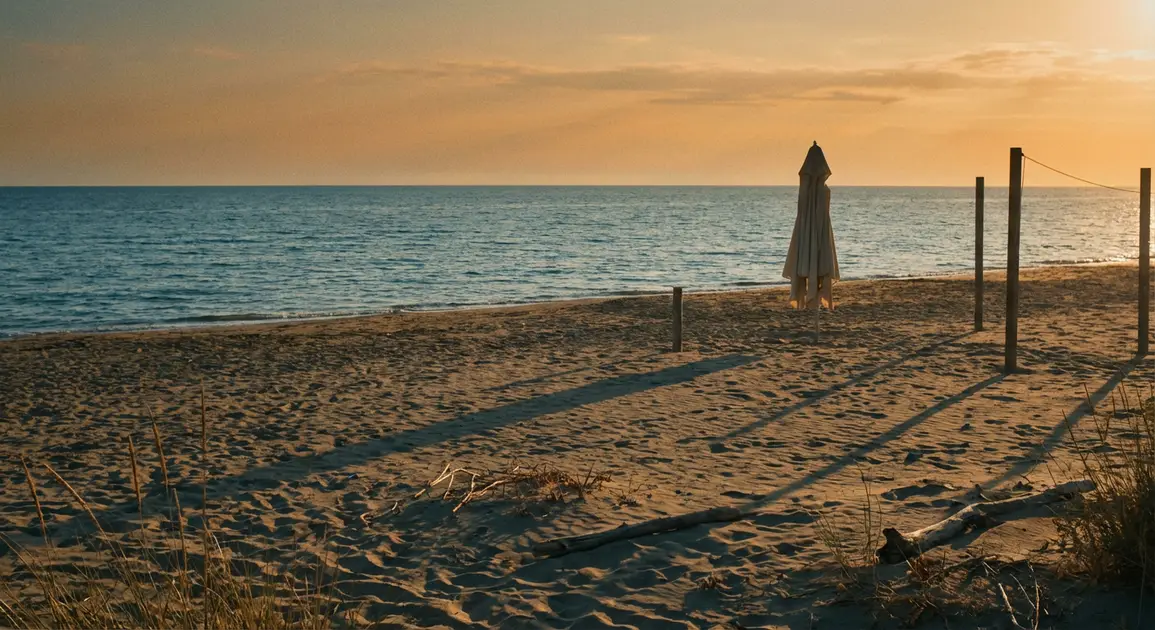
Not because August is bad — it isn't, and there's real energy to it. But September has a quality that August, by definition, cannot have: the sense that the island is settling back into itself. The pace slows. The light softens. The sea is still warm enough to swim at six in the evening before coming back for dinner. The restaurants are glad to see you and not just processing you. You can sit on the beach at Seccheto on a Tuesday morning in late September and feel, genuinely, that you've earned something the rest of the world hasn't found yet.
October has its own appeal — more introspective, better for walking than swimming, better for wine than sea. The occasional autumn storm rolls in from the west, usually passes in a day, and leaves the air clean and the light remarkable. It is not for everyone. But for those it suits, an October week on Elba is something they tend to repeat.
The window between early September and late October is, we think, the best-kept secret about this island. It's not entirely a secret anymore — the people who travel in shoulder season know it well. But compared to the crowds of August, it might as well be.