Casa Azzurrina
Elba's cooking doesn't try to impress. It's made of what the sea and the vegetable garden gave, put together by people who wasted nothing: humble fish, vegetables, day-old bread, a few sweets tied to the holidays. Eating Elba's traditional dishes, more than looking at them, is the best way to understand the island.
If you want to know where to start: at the restaurant look for cacciucco all'elbana, stoccafisso alla riese and octopus; for dessert, schiaccia briaca; to take home, a jar of palamita in oil (Tonnina's is a good bet), a wild-scrubland honey (I recommend the strawberry-tree or heather honey) and a bottle of Aleatico.
Below you'll find each dish, with a note on where to eat it or how to cook it at home.
From the sea
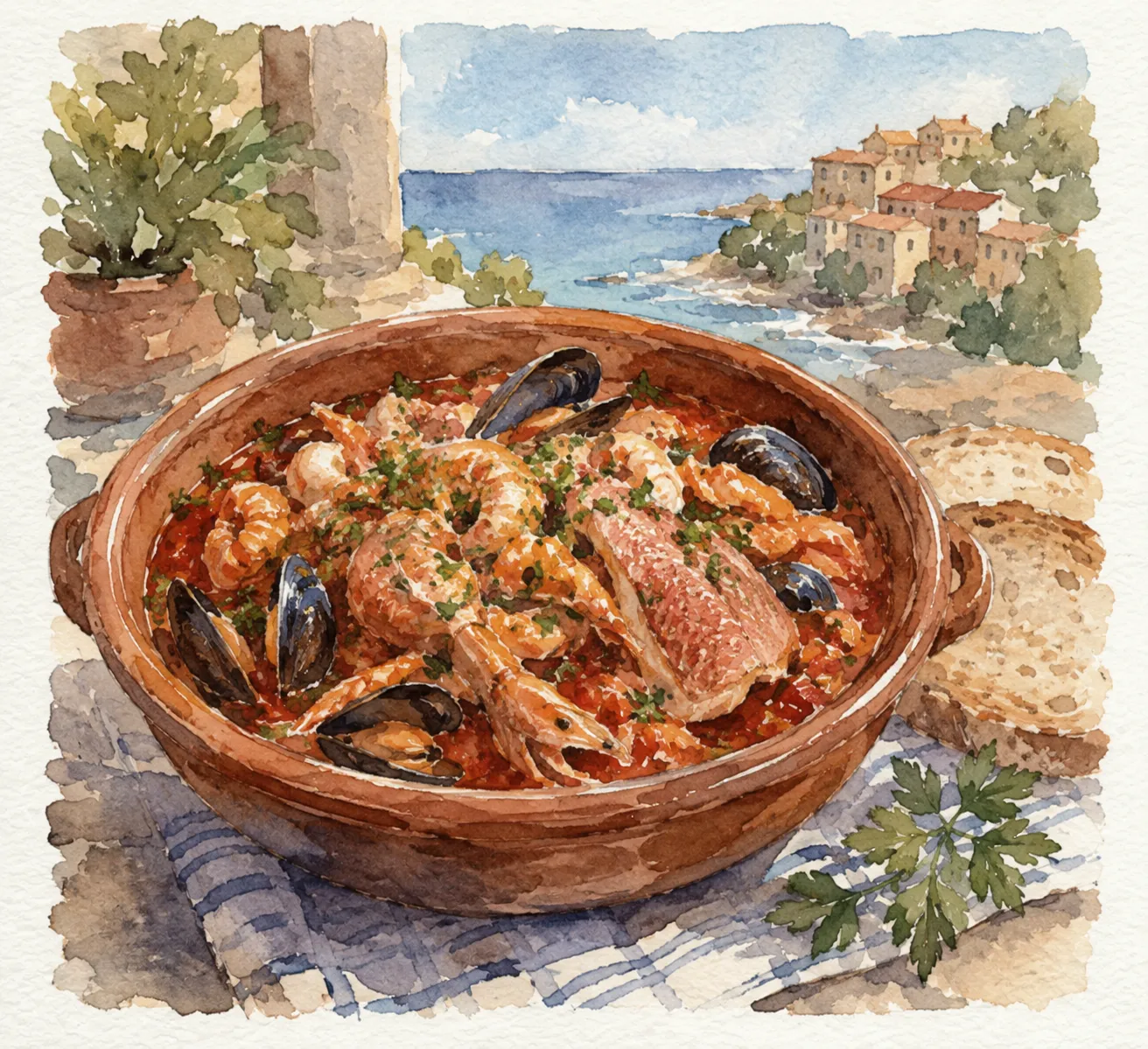
Cacciucco all'elbana (fisherman's fish stew)
Cacciucco all'elbana is the fishermen's fish stew: it was born from what stayed in the basket after the good catch had been sold, lots of different, humble fish cooked together. The name, they say, comes from Turkish and means roughly "mixture"; in Livorno they make a point of principle of it, at least five kinds of fish, one for each "c" in the word. The Elban version is poorer and more direct: it drops the trickier fish, like moray and conger eel, and keeps whatever the boat brings in.
The typical ingredients are cuttlefish, octopus, a few shellfish, mussels, and rockfish such as scorpionfish, gurnard and stargazer. For flavour: onion, garlic, chilli, sage and white wine; the tomato goes in as concentrate loosened with water, not fresh, which would make it too sweet. And underneath it all there's the fish broth, made separately with the small soup-fish and the cleaned trimmings.
Here's how it goes: first the broth, a soffritto of onion, carrot and celery, the little rockfish, a splash of white wine, then cold water with salt, chilli, cloves and bay, and a good half hour of slow cooking before passing it through a sieve. Then the stew itself: start with octopus and cuttlefish in big pieces with the aromatics, deglaze with wine, add the tomato concentrate and cook for a quarter of an hour. From there the other fish go in by firmness, the firm ones first and the delicate ones last; the mussels at the very last minute, because overcooked they're a sorry sight. You baste it with the broth as you go, moderate flame, and the stew is ready when the oil rises to the surface. Between broth and stew you're looking at about two hours, and it should stay slightly spicy.
It comes to the table over toasted Tuscan bread rubbed with garlic, with a glass of Elba Rosso.
Stoccafisso alla riese (Rio-style stockfish)
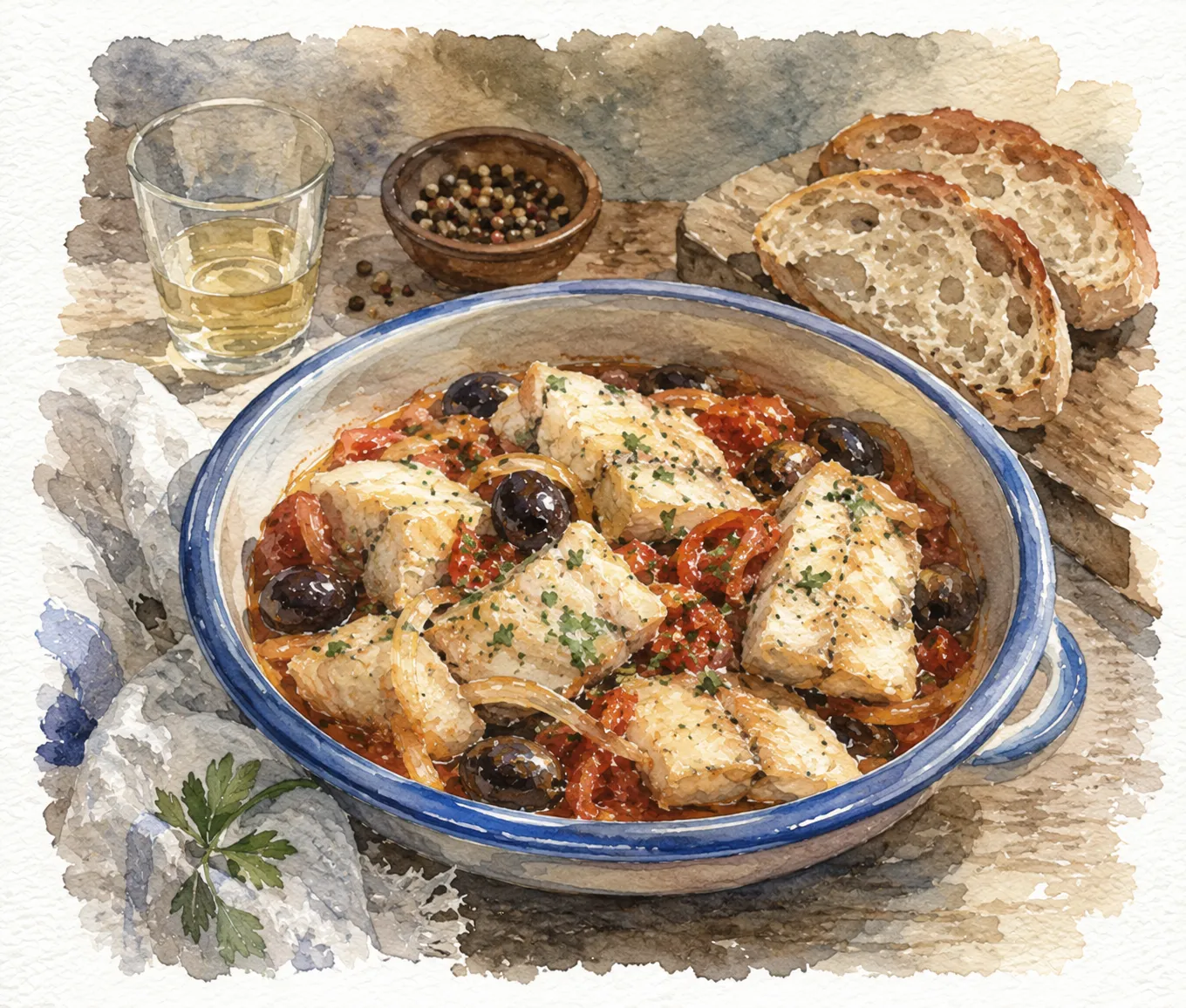
Stoccafisso alla riese takes its name from Rio, on the eastern side, the mining town where preserved fish has been at home for centuries. The recipe comes from the long voyages of Elban sailors, who came back with air-dried cod, stockfish, which unlike salt cod (baccalà) isn't salted but dried in the air, and married it with what the island offered: vegetables, olives, salted anchovies.
First comes the soaking. The stockfish is kept in cold water for two or three days, changing it often, until the flesh softens; then it's cleaned, skin and bones removed, and cut into pieces.
By tradition it's cooked in an earthenware pot. Start with a soffritto of onion in plenty of oil, with garlic, parsley and chilli; add the tomato (conserva or passata, better than fresh, which would sweeten it too much), let it reduce for a few minutes, then the pieces of stockfish go in to take on flavour, often with a splash of white wine. From there, black olives, desalted capers, anchovies and pine nuts, and, depending on who's cooking, potatoes in chunks about halfway through. The rest is done by time: low heat, lid on, at least an hour, often two, loosening with a little hot water when needed, until the sauce thickens and the flesh stays tender.
It's served hot, with a glass of island white. It's a dish for special occasions, the kind that asks for time, and gives it back.
Sburrita di baccalà (salt-cod soup)
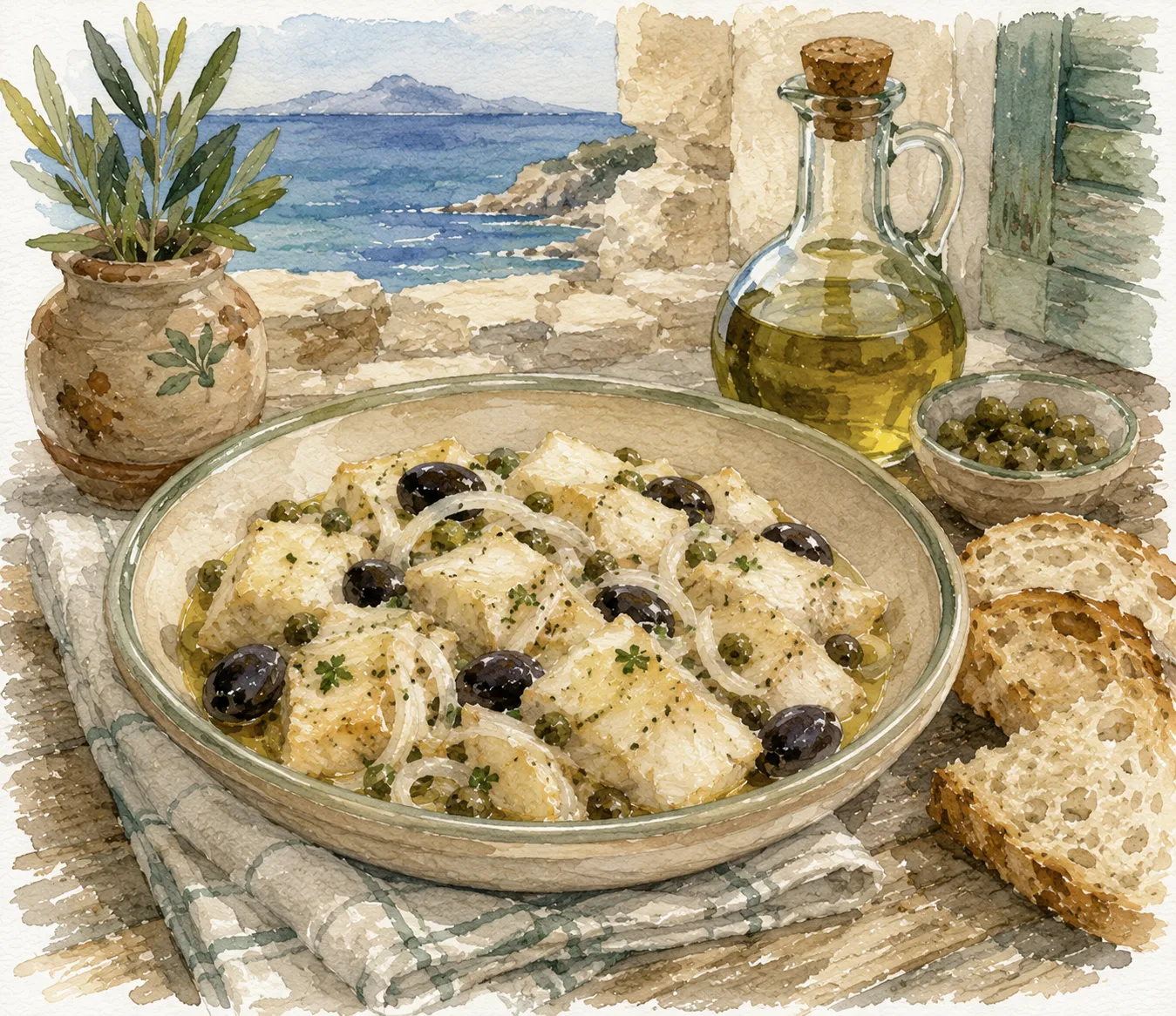
Also from Rio comes the sburrita (or sburita), a salt-cod soup with a precise history here: it was the miners' meal. Their wives prepared it, and the men carried it into the mine for their break, with a drop of wine. It's poor cooking to the core, it was also a way to use the thinnest parts of the cod, the belly and the tail, that elsewhere got thrown away.
The ingredients are few and honest: salt cod, plenty of garlic, chilli, nepitella (the wild calamint that grows along the roadsides), oil, water and stale Tuscan bread. No tomato, and often not even salt: baccalà is salted cod and carries enough already, which is why it must first be desalted, kept a couple of days in cold water changed often.
The traditional way starts from the broth. In a pot, better if earthenware, you put crushed garlic, nepitella and chilli with water and a glass of oil, and let it simmer a good half hour, until the water takes on the scent of the herbs. Only then does the cod go in, in pieces, cooking gently another quarter of an hour, just long enough to rise to the top and soften. It has to stay brothy: that little broth is the point.
You pour it all over slices of toasted Tuscan bread rubbed with garlic, with a grind of pepper and a thread of raw oil. Some serve it with boiled chickpeas on the side. If you find it on the menu, try it: it tastes of an Elba that tourism doesn't tell you about.
Octopus and stuffed squid
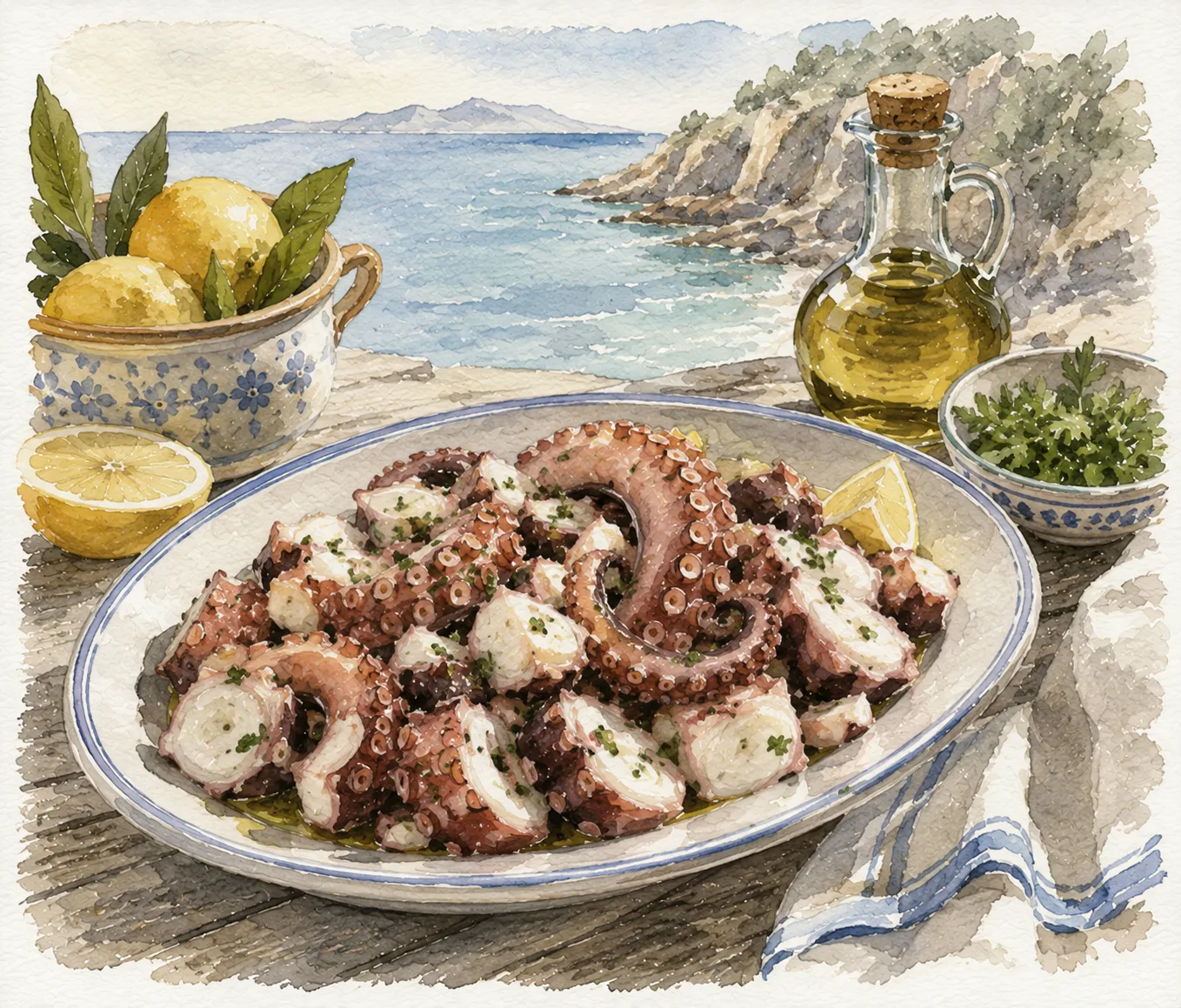
Octopus is the king of the mains, and on Elba boiling it is almost a ritual. In the old days street vendors, the "polpai", sold it near the wine bars, and in Portoferraio people still eat it that way: the "granfia", as they call it here, a tentacle speared on a fork with nothing on top, tasting only of the sea.
The secret is tenderness. Fresh octopus is kept in the freezer overnight and then thawed; you bring salted water to the boil and, holding it by the head, dip the tentacles three times before immersing it fully, so the "granfie" curl and the skin doesn't slip off. It cooks about forty minutes per kilo, but the step that makes the difference is at the end: let it cool in its own water before draining. From there, plain or with oil, lemon and parsley, perhaps over crushed boiled potatoes. The richer version is polpo affogato, cooked in tomato: a main in red that leaves a sauce perfect for pasta.
Look also for totani ripieni, stuffed flying squid. The totano is a cousin of the calamaro, with firmer flesh that needs slow cooking, and it's the tomato braise that makes it tender. You clean them, chop the tentacles and mix them with breadcrumbs, garlic, parsley and an egg to bind; some add olives, capers or anchovies. You fill the pouch without overdoing it, so it doesn't burst in cooking, close it with a toothpick and simmer it gently in tomato sauce for a good half hour, pricking now and then. They're served sliced into rounds, with their sauce.
Palamita (Atlantic bonito)
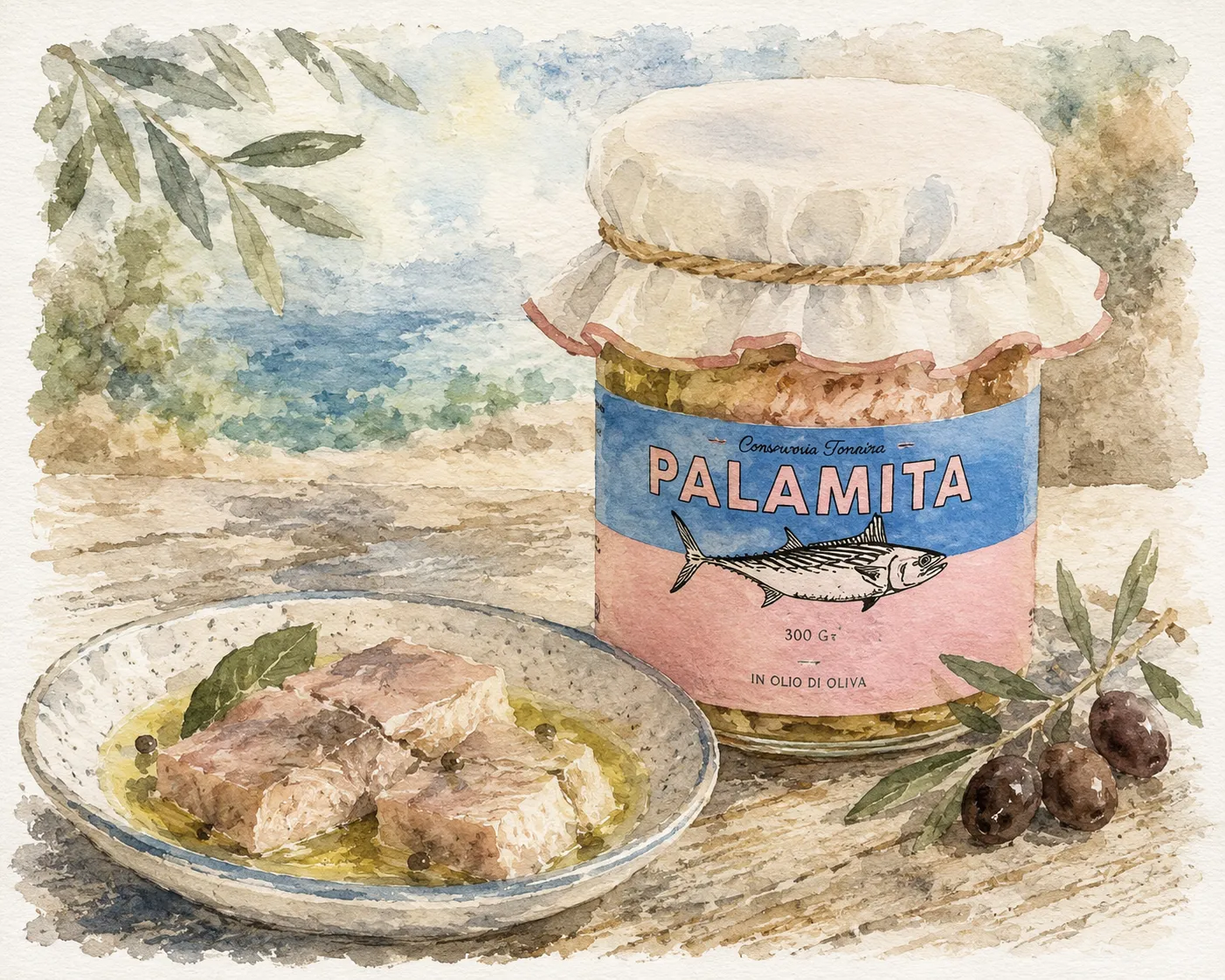
The fish to really get to know, though, is the palamita, the bonito. It's an oily fish similar to tuna, long unfairly treated as a poor relation, with firm flesh and a decided flavour; it's caught mainly between May and June and again in autumn, October to November.
On Elba it's cooked in umido, braised with tomato, capers, olives and that chilli which here, who knows why, they call "zenzero" (ginger); it's also excellent grilled. But the classic way is in oil, and it's a labour of patience: you poach the fillets of the larger fish, let them cool, put them in jars with bay and pepper covered in oil, and wait. The curing does the rest, a couple of months at least, until the flesh turns delicate and recalls good tuna. Once the preserve was made in October and opened for the holidays, like the Aleatico: the two flavours of the Elban winter.
The tradition arrived in Marina di Campo, the nearest town to Seccheto, with the fishermen of Ponza in the 1960s, and today the Palamita del Mare di Toscana is a Slow Food Presidium.
If you want to take home a jar made the right way, in Marina di Campo there's the Conserveria Tonnina, which works tuna, palamita and anchovies by hand in the old Elban tuna-curing tradition, with shops also in Capoliveri and a bistrot in Portoferraio. Look for their briccica di palamita in oil: "briccica", in Tuscan, means "a little thing of no importance", an ironic name for what stays the most Elban thing you can pack in your suitcase.
For the rest, you eat what comes into port in the morning: oily fish, cuttlefish, fried picarel, a soup of favollo crabs when there are any. The catch of the day, cooked without fuss.
From the land and the woods
Gurguglione (Elban vegetable stew)
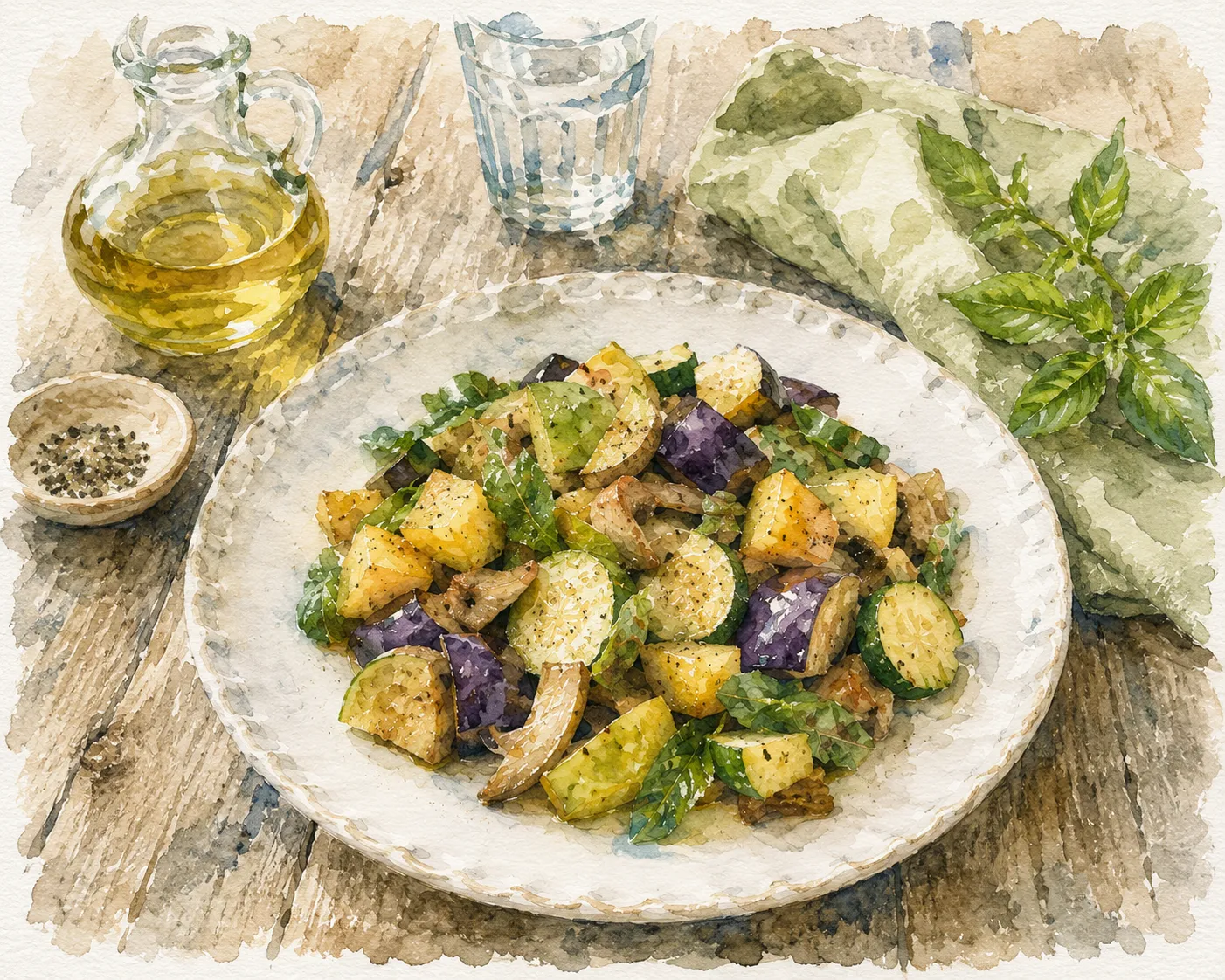
Gurguglione is Elba's peasant dish: a stew of garden vegetables (peppers, green ones preferably, aubergines, onion and tomato, often courgettes and potatoes too) cooked long until everything falls apart. The name, they say, comes from the gorgoglìo, the bubbling the vegetables make as they simmer in their own liquid. It's a cousin of ratatouille and of southern ciambotta, but its story is Elban and tied to Rio: it was one of the dishes of the "convìo", the packed meal miners and farmers took to work, made in the morning and eaten cold in the fields.
Making it is simple but wants patience. You cut the vegetables into big pieces, put them in a wide pot with oil, salt and chilli, and cook covered: a few minutes on a lively flame, then low, a good half hour, until they soften. No need to add water: their own juices are enough. The basil goes in at the end, off the heat, so it keeps its scent.
It's eaten warm or cold, with bread, and what they say here is true: it's better the next day, because the flavours settle. As a side it goes with meat and fish; with two slices of toasted bread and a grating of cheese it becomes a meal in itself. Some enrich it with a poached egg (in Capoliveri they always do, and there they call it "gaspaccio") or a spoonful of tonnina, preserved tuna.
Tagliatelle with "alla bracconiera" wild boar ragù
Away from the coast there's another Elba, the one of the woods. Climbing inland, between Marciana and the villages under Monte Capanne, the cooking changes register: meat arrives, and above all wild boar.
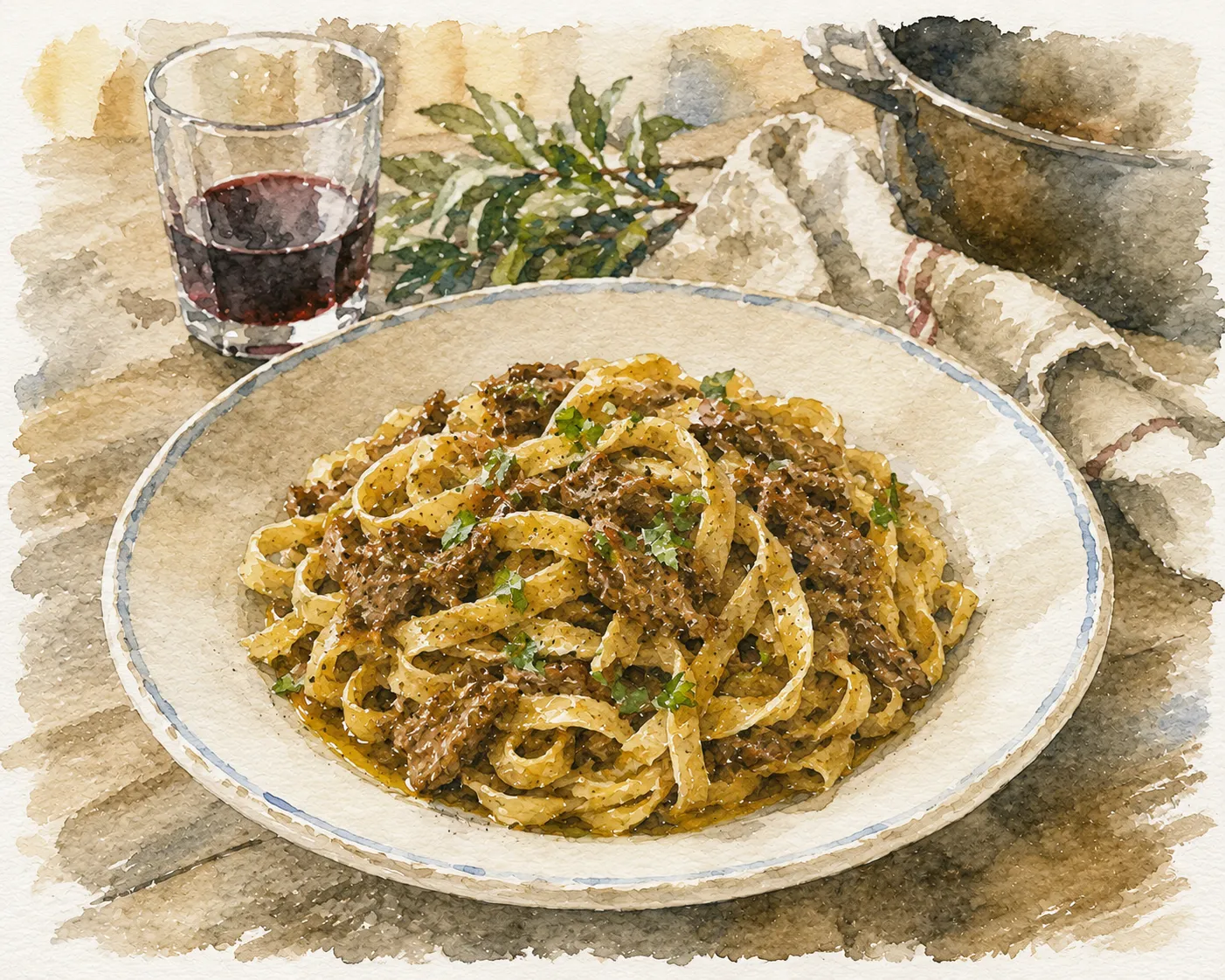
The traditional dish is the ragù "alla bracconiera", the poacher's ragù, born among hunters. The strong-flavoured meat is first marinated overnight in red wine with vegetables and the herbs of the scrubland (rosemary, bay, juniper berries); then it's browned and braised slowly, a couple of hours or more, with wine and tomato, until it falls apart. That sauce dresses tagliatelle or pappardelle: it's one of the truest flavours of the interior.
To eat it, it's worth going up into the hills. In Marciana there's the Osteria del Noce, Elban and Mediterranean cooking with a terrace over the sea and game on the menu. A little higher, in Poggio, there's Publius, a historic restaurant run by the Fontana family since 1970, with a view over the gulf of Marciana Marina and wild boar among its signature dishes. It's a side of the island that those who stay on the beach never imagine.
The sweets
Schiaccia briaca
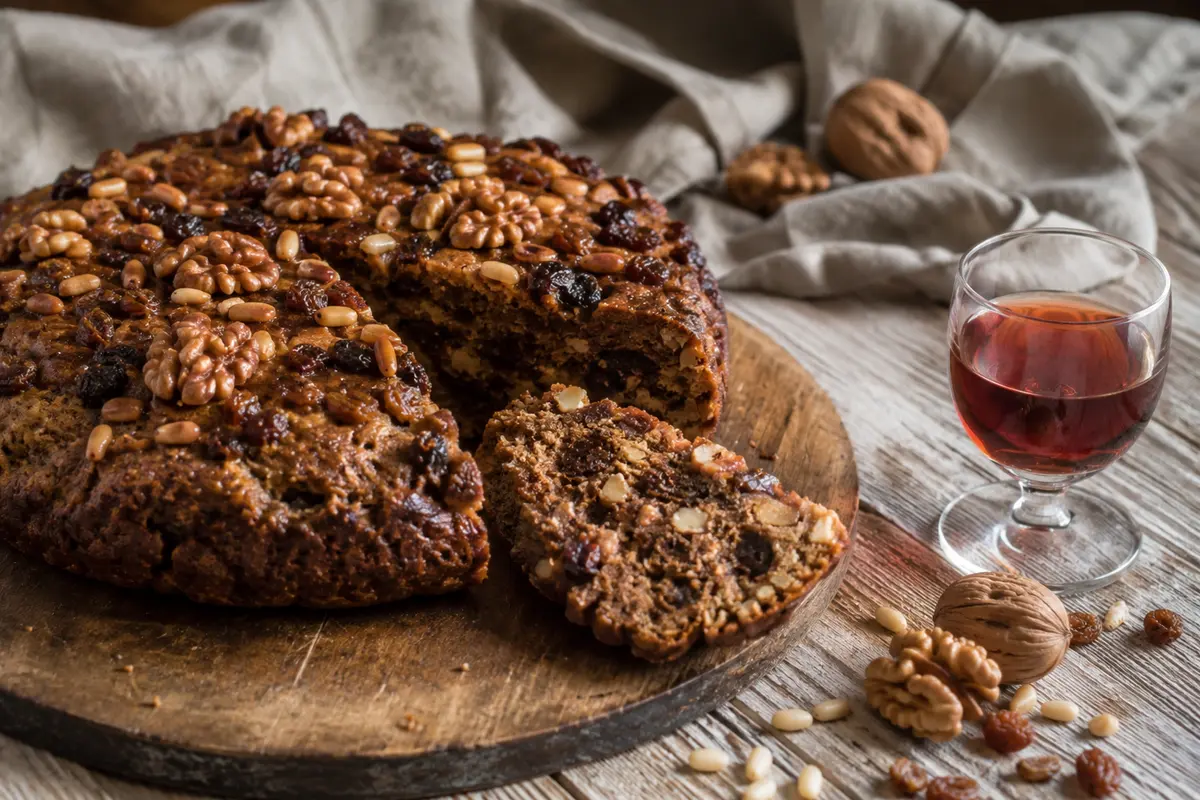
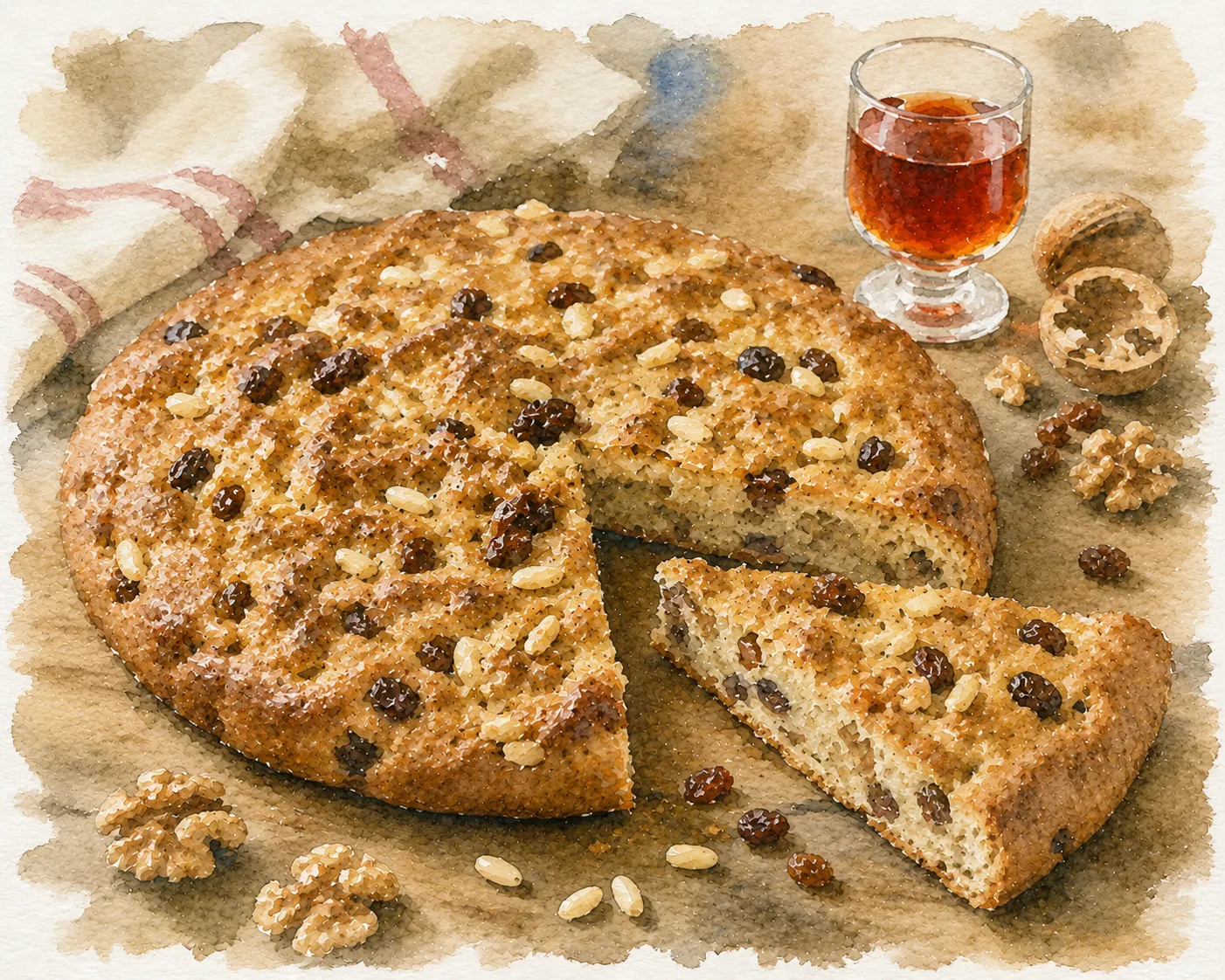
Schiaccia briaca is the island's signature sweet: a dense, almost dry focaccia of walnuts, almonds, pine nuts and raisins, with no eggs, no butter and little or no leavening. Precisely because it's compact it kept for a long time, which is why it was born as travel provision: women made it to give the men strength at sea, and it was given to those setting off.
Its history is older than it seems. Its roots lie in the raids of the Barbary pirates between the 13th and 16th centuries, who left the island the flavours of the Near East: raisins, pine nuts, dried fruit, honey. At first it was even alcohol-free, in keeping with Islamic rules. The wine arrived only in the 19th century, and from then the schiaccia became "briaca", drunk, soaked in Aleatico and often a drop of Alchermes, which gives it that reddish colour. The walnuts too, which weren't grown on the island, are an addition of that period.
As always on Elba, every village has its own: the Rio version is the most "briaca", red with Aleatico and Alchermes, while in Capoliveri they make it pale, with Moscato instead of Aleatico.
Making it isn't hard. You roughly chop the dried fruit, soak the raisins, and mix flour, oil, sugar (once honey), Aleatico and Alchermes, working the dough as little as possible; you spread it in a round tin and bake at 180°C for about forty minutes, dusting it halfway with more sugar and Alchermes. Today it's made mostly at Christmas, but you'll find it in bakeries and pastry shops all year. It's enjoyed with a small glass of Aleatico; where that wine comes from we tell you in our guide to Elba's wines, Ansonica and Aleatico.
Sportella and corollo
At Easter they make the sportella and the corollo, two anise sweets tied to an old courtship custom: the sportella was given to the girl, the corollo, ring-shaped, also called cerimito, to the boy. You find them in the bakeries at the right times of year, and they tell of a village Elba you don't see outside the holidays.
If you come across them, try the frangette too, ribbons of fried dough worked with a drop of Moscato and dusted with sugar, and the schiacciunta, a simple cake of eggs, flour, sugar, lard and lemon zest.
Wines to take home
Part of the pleasure here is buying, to take home a little piece of the island.
Aleatico
Aleatico is Elba's celebration wine, and the natural companion to schiaccia briaca. For a reference bottle, take the Alea Ludendo by Tenuta delle Ripalte, a pure Elba Aleatico Passito DOCG. The grapes grow on the Ripalte promontory, towards Capoliveri; they're harvested in early September and then left to dry in the sun on racks for about a week, which is how the sugars and aromas concentrate. What comes out is a ruby-red passito, with hints of cherry jam, dried fruit and spice; sweet, but held up by a fine acidity, with a long finish. Serve it at 12–14°C, with schiaccia briaca or a chocolate dessert; it also stands up to a blue cheese, a gorgonzola or a Roquefort. It comes in the 0.375 half bottle, as the passito tradition wants.
Ansonica
Another typical wine worth attention is Ansonica, the dry white to drink with fish. It's the most characteristic white grape of Elba and of Giglio: the same one they call Insolia in Sicily, arrived centuries ago from across the Mediterranean and long at home on the islands. It has large, golden, thick-skinned berries, stands up well to sun and wind, and gives a dry, savoury wine, with scents of citrus, white flowers and yellow-fleshed fruit, and that salty note that tastes of the sea. It's the white for the aperitivo and for the whole dinner, especially when there's fish: spaghetti with clams, a fried mixed fry, a boiled octopus.
For a specific bottle, take the Zampicata by Montefabbrello, a pure Ansonica, golden in colour and soft on the palate, with aromas of ripe fruit. The name tells of an old gesture: "zampicare" is the word used on the island's western side for pressing the grapes, and the wine is made in a palmento, the stone trough where grapes were once crushed by foot. It's a way of making wine that tastes of another time.
Vermentino
A Vermentino worth seeking out is the Arrembapane by Arrighi, a pure Elba Vermentino DOC. On Elba Vermentino has always been called "Riminese", and here it finds its home: windy hills a stone's throw from the sea. It's a small production, a few thousand bottles, hand-harvested and aged only in steel and then a few months in the bottle, no wood: it stays direct and fresh, an everyday table white. The winery, in Porto Azzurro, is that of Antonio Arrighi, the same behind the "sea wine" aged in amphorae on the seabed: one of the island's most curious and best-known names. At around eleven euros, it's an honest white to open with the catch of the day.
If you want an Elban white with more structure than the classic Ansonica or Vermentino, try the Bianco Mediterraneo by Tenuta delle Ripalte. It's born on the southern slope of Monte Calamita, in the wildest part of the island towards Capoliveri: vines at three hundred metres above the sea, iron-rich soil and constant wind, low yields. It's mostly Vermentino, with a share of Fiano, organic, vinified partly in steel and partly in French oak tonneaux. In the glass it's straw-yellow, with scents of citrus and white flowers and a fine savoury drive; on the palate it's fresh, with a long citrus finish. Serve it at 10–12°C, with fish, shellfish, a plate of spaghetti with clams. It's collected awards in the guides for a few years now, and you can tell.
Dinner and after
For the restaurants of Seccheto we've made a separate guide, with the places where you eat the catch of the day: where to eat in Seccheto. In Marina di Campo, the nearest town, we point out two, different from each other. For a special dinner, the restaurant Al Moro: the creative cooking of chef Andrea Saverino, in the Michelin guide, in the countryside a kilometre from the beach.
For real tradition, instead, the restaurant Da Paolo, a historic Marina di Campo trattoria that recently changed premises while staying its old self.
And in summer, to cool off, the artisan gelato at ZeroGradi: the pistachio, made with real pistachio, is worth the queue; we also recommend the cassata flavour, great as a milkshake too.
But buying and cooking, here, is half the fun: vegetables from the farmer, fish just off the boat, a bottle of Ansonica, and dinner made at your own pace. Our apartments in Seccheto, Appartamento Mare and Appartamento Cielo, have a kitchen equipped for exactly this: you come back from the beach, open the window onto the sea and make dinner with what you found during the day.
Frequently asked questions
What is Elba's most famous traditional dish?
The most representative is cacciucco all'elbana, the fishermen's fish stew, together with stoccafisso alla riese, Rio-style stockfish. On the eastern side, in Rio, there's also sburrita di baccalà, born as the miners' meal.
What is the typical dessert of Elba?
Schiaccia briaca: a dense focaccia of walnuts, almonds, pine nuts and raisins soaked in Aleatico. In the Rio version it's red with Aleatico and Alchermes, in Capoliveri paler and made with Moscato. At Easter you'll also find sportella and corollo.
Which typical products should you buy on Elba?
A jar of palamita in oil (the Palamita del Mare di Toscana is a Slow Food Presidium), a wild-scrubland honey such as strawberry-tree or heather, extra virgin olive oil, and a bottle of island wine: Aleatico for the sweets, Ansonica or Vermentino for fish.
Is it only fish on Elba?
Mostly fish, but not only. The interior has its own cooking of land and woods: the gurguglione vegetable stew, stockfish and salt cod, and wild boar dishes such as tagliatelle with ragù alla bracconiera, eaten up towards Marciana.
Which wine goes with Elban dishes?
With fish, a dry, savoury white like Elba's Ansonica or Vermentino. With sweets, and with schiaccia briaca in particular, Aleatico Passito DOCG. With cacciucco or wild boar, an Elba Rosso works well.
Where can you eat well near Seccheto?
In Marina di Campo, the nearest town: Al Moro for creative cooking (Michelin guide) and Da Paolo for the traditional trattoria. For the catch of the day there's our guide to Seccheto's restaurants; in summer, gelato at ZeroGradi.