Casa Azzurrina
A place that doesn't try to be anything it isn't
There's a particular kind of Italian village that knows exactly what it is and has no interest in being anything else. Seccheto is that kind of place. Tucked into the southwest coast of Elba, it doesn't have a tourist office or a beach club or a row of souvenir shops. What it has is a sandy bay, a handful of granite boulders the size of small houses, a bar that opens early and closes when it feels like it, and the kind of quiet that you have to seek out these days.
We've spent enough time on Elba to know most of its corners, and Seccheto is the one we keep coming back to. It's not the most famous part of the island — that would be the beaches around Lacona or the marina at Portoferraio. It's not the most dramatic — Sant'Andrea on the northwest coast holds that title, with its rocky cliffs and improbably clear water. But Seccheto has something harder to name: a quality of light in the late afternoon, a pace that takes about forty-eight hours to fully absorb, and the sense that you've arrived somewhere real.
The beach
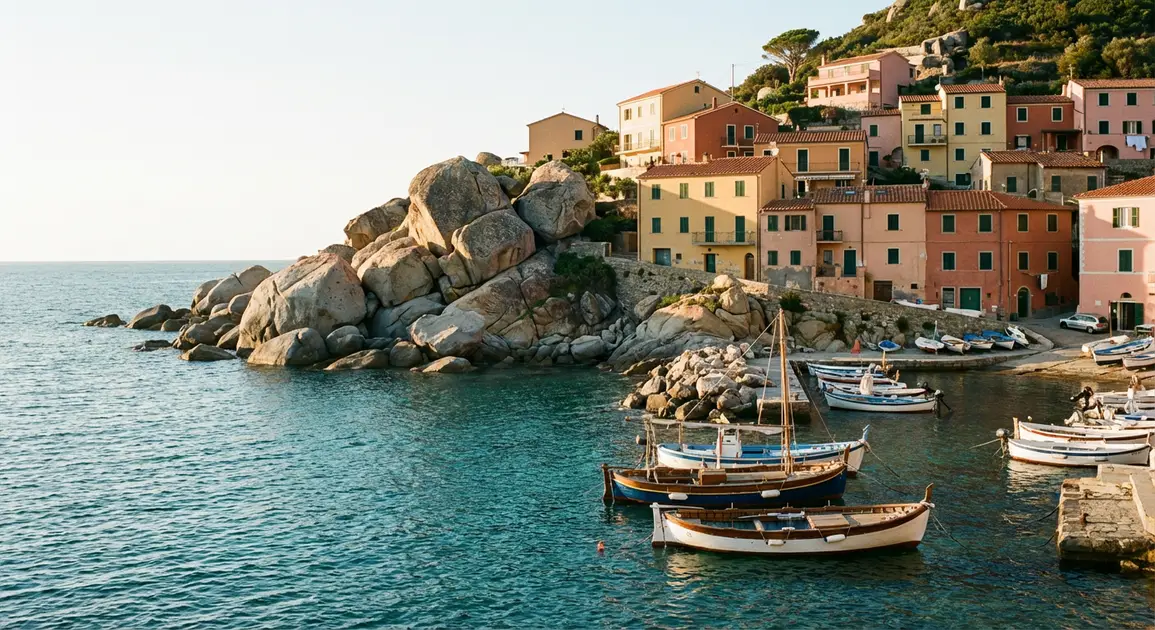
Seccheto beach sits at the base of the village, a few minutes' walk down through a quiet road lined with stone walls and pine trees. It's sandy — genuinely sandy, not the pebbly approximation that passes for a beach on parts of the Italian coast — and backed by the ancient granite formations that define this corner of Elba. The boulders don't crowd the beach; they frame it, tumbling into the water at either end and creating shallow rocky areas that are excellent for snorkeling.
The water deepens gradually from the shore, which makes it particularly good for families with children. Near the rocks it gets interesting quickly — there are sea urchins and the occasional octopus in the crevices, and in the right light you can watch small fish move through the granite channels. Further out, the bottom drops away and the color shifts from pale turquoise to a deeper blue-green.
The beach faces southwest, which is important. It means the morning is relatively shaded and calm — the best time to arrive if you want the place to yourself, or close to it. By midday there's full sun. By late afternoon, the light turns amber and the granite takes on a warmth that's difficult to describe accurately but easy to remember. The sunsets here are not the lurid Instagram kind; they're quieter than that, and better.
How it compares to Cavoli
The next bay over — Cavoli, about a twenty-minute walk along the coast path — gets more visitors. It's slightly larger, has a couple more facilities, and tends to attract day-trippers from the inland camping areas. Seccheto is quieter by nature and by design. There's no parking lot that encourages high turnover; most of the people on the beach either live nearby or are staying within walking distance. By day three, you start recognizing faces.
The village itself
"Village" is perhaps generous. Seccheto has a piazza — small, shaded by trees, with a bar that serves coffee in the morning and aperitivo in the evening. There are a few restaurants, all of them focused on seafood, none of them pretending to be anything other than what they are. There's a mini-market where you can buy enough to stock a kitchen. And that, essentially, is the infrastructure.
This is either a dealbreaker or the entire point, depending on who you are.
The restaurants are worth knowing. They're small, they fill up in August, and they serve the kind of food that makes sense in context: fresh fish, local wine, simple preparation. Totani alla piastra — flying squid, grilled — is the thing to order if you haven't had it before. The catch changes with the season and the luck of the local fishermen, and any good restaurant here will tell you what came in that morning.
The bar in the piazza is the social heart of the village. In the morning it's locals getting coffee before work. In the late afternoon it's everyone. Sit outside, order something cold, and watch the rhythms of a village that has been doing this longer than tourism has existed on this island.
The granite
One thing that distinguishes the southwest of Elba from the rest of the island is the geology. This corner is characterized by ancient granite formations — massive, rounded boulders that appear to have been placed deliberately, though of course they were shaped over millions of years by the sea. They emerge from the water, line the coast, and give the landscape a completely different character from the sandy, more developed northern beaches.
The granite creates natural swimming pools between boulders at the water's edge. It creates ledges for diving, channels for snorkeling, and surfaces that hold the heat of the sun long into the evening. It also means the coastline here is genuinely wild in places — you can walk along the rocks away from the main beach and find spots that feel entirely private, even in summer.
Why we chose Seccheto
When we were deciding where on Elba to put down roots, we spent time in most of the island's areas. Portoferraio is the most practical — services, ferries, everything you need. The north coast has some of the most famous beaches. But there was something about the southwest that we kept returning to.
Part of it was the light — that southwest-facing exposure means long evenings and a quality of afternoon sun that the north coast, facing the mainland, doesn't quite match. Part of it was the quiet, which in high season on Elba is genuinely hard to find. And part of it was that Seccheto felt like a real community rather than a seasonal tourist infrastructure. The people who live here year-round have a relationship with this place that you can feel, and staying here puts you in proximity to that.
Casa Azzurrina is 200 metres from the beach, less than three minutes on foot. That distance matters — close enough to be practical, far enough to have the village between you and the water, which means you feel part of Seccheto rather than just passing through it.
It's here in Seccheto that we opened our sea-view apartments: Appartamento Mare on the ground floor and Appartamento Cielo on the first floor.
What's nearby
Seccheto is not isolated. Within walking distance, Cavoli offers a slightly larger beach and what we consider the best restaurant options in the immediate area — a couple of places with outdoor tables, excellent local wine lists, and kitchens that take their seafood seriously.
By car, the southwest of Elba opens up considerably. Fetovaia, about five minutes away by car, is one of the island's most beautiful bays — a narrow channel between headlands that creates a natural enclosed swimming area. It gets busy in August but remains genuinely spectacular. Sant'Andrea, about thirty minutes north, is worth a special trip: the rocks there are dramatic, the snorkeling among the best on the island, and the village has a handful of good places to eat.
Marina di Campo, fifteen minutes east, is the main town of southern Elba — it has a proper supermarket, a pharmacy, a hardware store, and all the practical services you might need during a longer stay. Its beach is long and broad but busy; most people use Marina di Campo as a base for logistics rather than relaxation.
Who Seccheto is for
This requires honesty, because Seccheto is genuinely not for everyone, and there's no point pretending otherwise.
If you want a beach club with sun loungers and a DJ, Seccheto will disappoint you. If you want a village with a cocktail bar that stays open past midnight, you'll need to drive to Marina di Campo or further. If you want the kind of holiday infrastructure that removes all friction — organized activities, a hotel with a concierge, restaurants with English menus — this is probably not your place.
Seccheto is for people who have been on that other kind of holiday and know it's not what they're after. It's for people who want to swim in the morning before anyone else arrives, eat fresh fish in the evening, and spend the hours between doing as little as possible. It's for people who find silence restful rather than boring, and who understand that the absence of things to do is not a failure of planning but the entire point.
The guests who come back to this part of Elba — and many of them do come back — tend to describe it the same way: they needed more time. Not more to do, just more time to be here.
That's Seccheto. It's enough.