Casa Azzurrina
Why a boat changes everything on Elba
Elba is a small island — about 27 kilometres long — but much of its best coastline is inaccessible by road. The most dramatic swimming spots, the quietest bays, the snorkeling grounds that actually warrant the word exceptional: a good portion of them are only reachable by sea. You can spend two weeks on Elba driving to beaches and never access the places that make the island genuinely special.
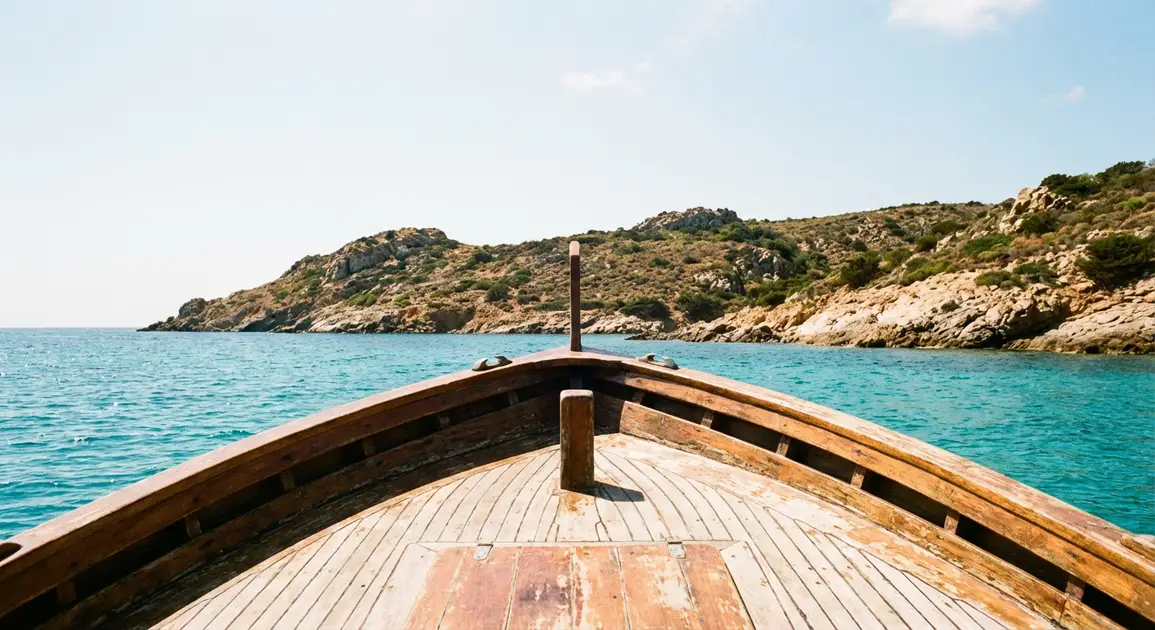
A day on a rented boat is one of those experiences that sounds like an upsell until you've done it. Then it becomes the thing you tell everyone about when you get home. You set your own pace, you anchor where you want, you eat lunch in a bay you have entirely to yourselves, and you see the island from the angle the island actually rewards.
We recommend it without hesitation. With a few practical caveats.
The basics: renting a boat on Elba
Licence requirements
In Italy, boats up to 40 horsepower can be rented and driven without a nautical licence. This covers the majority of small motorboats available for day hire — typically 5 to 6 metre craft that seat four to six people comfortably. They're manageable for anyone who's comfortable on the water and has basic common sense about weather and other vessels.
If you want something larger or faster — a rigid inflatable (RIB) or a proper motorboat above 40hp — you'll need either a skippered charter or a valid nautical licence.
Where to rent
Most rental outfits are concentrated in three places: Portoferraio (the main port, widest selection), Marina di Campo (the main town of the south, most practical for guests in our area), and Marina di Marciana on the northwest coast. For guests staying near Seccheto or Cavoli, Marina di Campo is the obvious starting point — it's fifteen minutes by car and has several rental operators along the waterfront.
Cost for a small motorboat (5-6m, 40hp): approximately €80–150 per day depending on the season. Fuel is extra — budget another €30–60 depending on how far you go. July and August: book at least a week in advance, preferably more. June and September you can often book with two or three days' notice.
The skippered charter option
If you're not confident handling a boat, or if you want to make the most of the experience without spending mental energy on navigation and weather-watching, a skippered day charter is worth serious consideration. You get a knowledgeable local captain who knows every anchorage, which bays to avoid when the wind shifts, and where the snorkeling is genuinely worth stopping for.
Cost: approximately €300–600 for a group, depending on the boat, the captain, and whether lunch or snorkeling equipment is included. Ask around at the Marina di Campo waterfront, or ask locally — the best skippers tend to work by word of mouth. Often they'll include a cooked lunch or a stop at a fish restaurant accessible only from the water.
What to bring
Pack more water than you think you need. The sun on the water is relentless in a way that's easy to underestimate, and dehydration arrives quickly when you're swimming between stops. We bring a large cooler with water, cold drinks, and enough food for a proper onboard lunch — cold pasta, bread, cheese, fruit. Simple food eaten at anchor in a quiet bay is one of the better meals you'll have on any holiday.
Other essentials: reef-safe sunscreen (the posidonia meadows and marine life here are worth protecting), your own snorkeling masks and fins (rental masks are often poor quality and ill-fitting — bringing your own makes a significant difference), a windbreaker for the return leg (the afternoon sea breeze on Elba can be brisk even in July), and cash for any fuel stops. Anchor shoes or water shoes are useful for rocky landings. Bring a bag for rubbish — leave every anchorage as you found it.
The itinerary
This route works well starting from Marina di Campo, which puts you within easy reach of the western coast. The timings assume a departure around 9:00 and a return by 17:00–18:00. Distances are short on Elba; travel between stops rarely takes more than twenty to thirty minutes.
First stop: Cala del Gesso (near Sant'Andrea)
Head northwest along the coast toward Sant'Andrea. Cala del Gesso is a small inlet framed by dramatic granite formations — massive rock faces that drop directly into deep, clear water. The snorkeling here is among the best on the island: the granite creates varied terrain with abundant marine life, and the light in the morning hours filters through in a way that makes the water look lit from within.
Arrive early. By midday there will be other boats. In the morning, you may have the whole place to yourselves. Spend an hour here, swim, snorkel, then move on before the crowds arrive.
Second stop: Spiaggia di Pomonte
Continue south along the western coast to Pomonte. This is a quiet bay with a small beach, little tourist infrastructure, and one significant attraction: a shipwreck lying in relatively shallow water. The Elviscot, an Italian cargo ship that ran aground and sank in 1972, is visible by snorkel and accessible to divers. Even from the surface, you can see the outline of the hull in the sandy bottom.
Pomonte gets very few day-trippers. It's the kind of stop that rewards the effort of getting there, and it's one of the best arguments for having a boat — arriving by sea means you access something that most visitors on Elba never see.
Third stop: Punta Fetovaia
Round the southwestern headland and enter Fetovaia bay from the sea. If you've visited Fetovaia by land — and it's worth doing — seeing it from the water gives you an entirely different perspective on the bay's geography. The headlands close in around you, the water colour shifts as you enter, and the beach appears as a narrow strip at the far end.
Anchor offshore for a swim. Don't try to land here by boat; the beach gets busy and the anchorage can be crowded in summer. The pleasure of this stop is the approach — and the swim in water that's noticeably clear even by Elba's standards.
Lunch: anchor in a quiet bay
Rather than building a specific restaurant stop into the itinerary, we'd argue strongly for an onboard lunch at anchor. Find a sheltered bay — there are dozens on the southwestern coast — drop anchor in four to six metres of water, eat what you've brought, and swim off the stern.
This is the part of the day that people remember. Not the most scenic stop or the best snorkeling spot, but an hour drifting at anchor eating bread and cheese while the island sits quietly around you. Don't rush it. The afternoon will take care of itself.
Optional afternoon stop: Cala di Mola or Cala Felce (northeast coast)
If you have energy and the sea conditions are calm, the northeastern coast of Elba — around Capo d'Enfola and toward Rio Marina — is a different character from the southwest. The water is deeper and darker, the cliffs more vertical, and there are far fewer boats. Cala di Mola and Cala Felce are both worth knowing: small, dramatic, and relatively unknown even to regular Elba visitors.
The honest caveat: the northern coast can get choppy in the afternoon when the prevailing west wind picks up. Check conditions before committing to this leg. If there's any doubt, skip it and spend the extra time back in a sheltered bay you've already loved.
Return
Aim to be back at Marina di Campo by 17:00–18:00. The afternoon wind on the western coast of Elba tends to build through the day, and the return leg can be livelier than the outward journey. This isn't a problem — a bit of chop at the end of a long day on the water is part of the experience — but it's worth knowing, and it's a reason not to push the afternoon too far west.
Return the boat, rinse the salt off, and decide whether the evening calls for dinner in Marina di Campo or the drive back to Seccheto for something quieter.
Practical advice worth reading
Check the weather before you go. The sea state forecast is as important as the weather forecast. On Elba, the Tramontane and Libeccio winds can build quickly, particularly in the afternoon. The channel between Elba and the island of Pianosa to the south can get rough; if in doubt, stick to the eastern or northern coast and avoid open water passages.
Do not anchor on posidonia. The seagrass meadows in Elba's shallow waters are protected marine habitat and a vital part of the ecosystem. Anchoring on them is illegal under Italian maritime law and genuinely destructive. Look for sandy patches, check the anchor is not dragging onto grass, and if in doubt, find another spot. Most rental operators will tell you this; we're telling you again because it matters.
Don't overplan the itinerary. We've listed five possible stops above. Do three of them well and you'll have a better day than if you rush through all five. The instinct to maximize the number of places visited is understandable but counterproductive on a day like this. Two hours at Cala del Gesso with time to actually swim and watch the light is worth more than four rushed stops.
Fuel stops. Marina di Campo has a fuel dock. Top up before you leave and you'll almost certainly have enough for the day if you're not running at full throttle. If you're uncertain, ask the rental operator.
Our honest take
We've done this trip in various configurations over the years — with a skippered charter, with a rented boat, with more people on board than was strictly comfortable, with too ambitious an itinerary, with too little food. The version that consistently works best is a small group, an early start, a proper onboard lunch, and an afternoon that's left deliberately unplanned.
Elba from the sea is a different island from the one you encounter by road. The coastline reveals itself differently — the scale of the granite formations, the colour shifts in the water as the bottom changes, the way a bay that looks ordinary on a map turns out to be extraordinary when you arrive at it by boat. It's worth doing once. Most people want to do it again before the first time is finished.